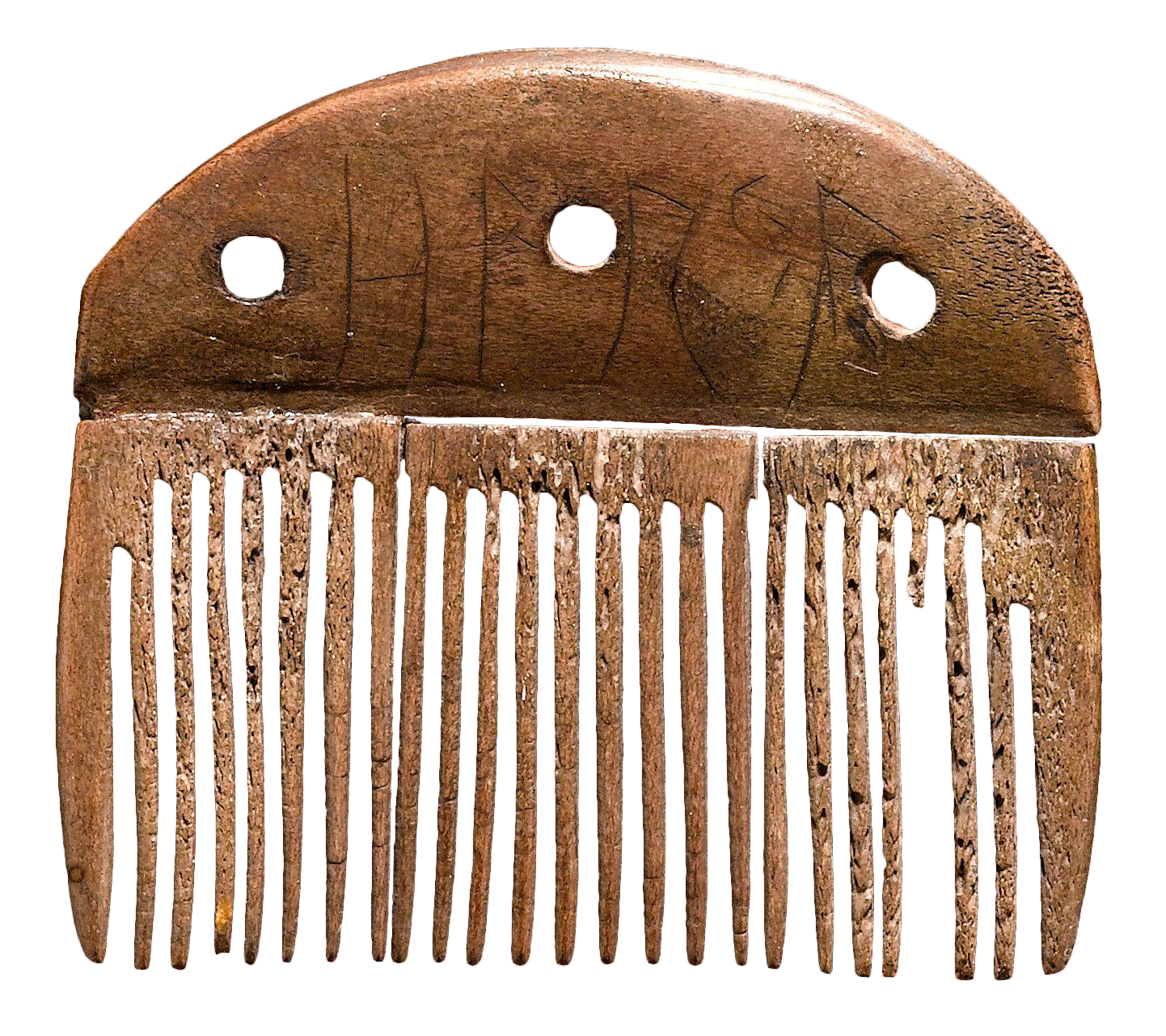
The comb was recovered from the Vimose bog on Fyn, a major votive deposit site active from roughly the 1st to the 6th century CE. The deposit of c. 160 CE in which it was found included Roman military equipment alongside local material, reflecting the broad geographical reach of the offerings made at the site.
Five runes are scratched across the flat surface of the spine, ᚺᚨᚱᛃᚨ, reading harja (DR 207). The interpretation is unresolved: it has been read as a personal name, possibly that of the original owner, as Erik Moltke suggests; a tribal designation; or an early word for comb.
The Vimose Comb is generally considered the oldest securely datable runic inscription known.