
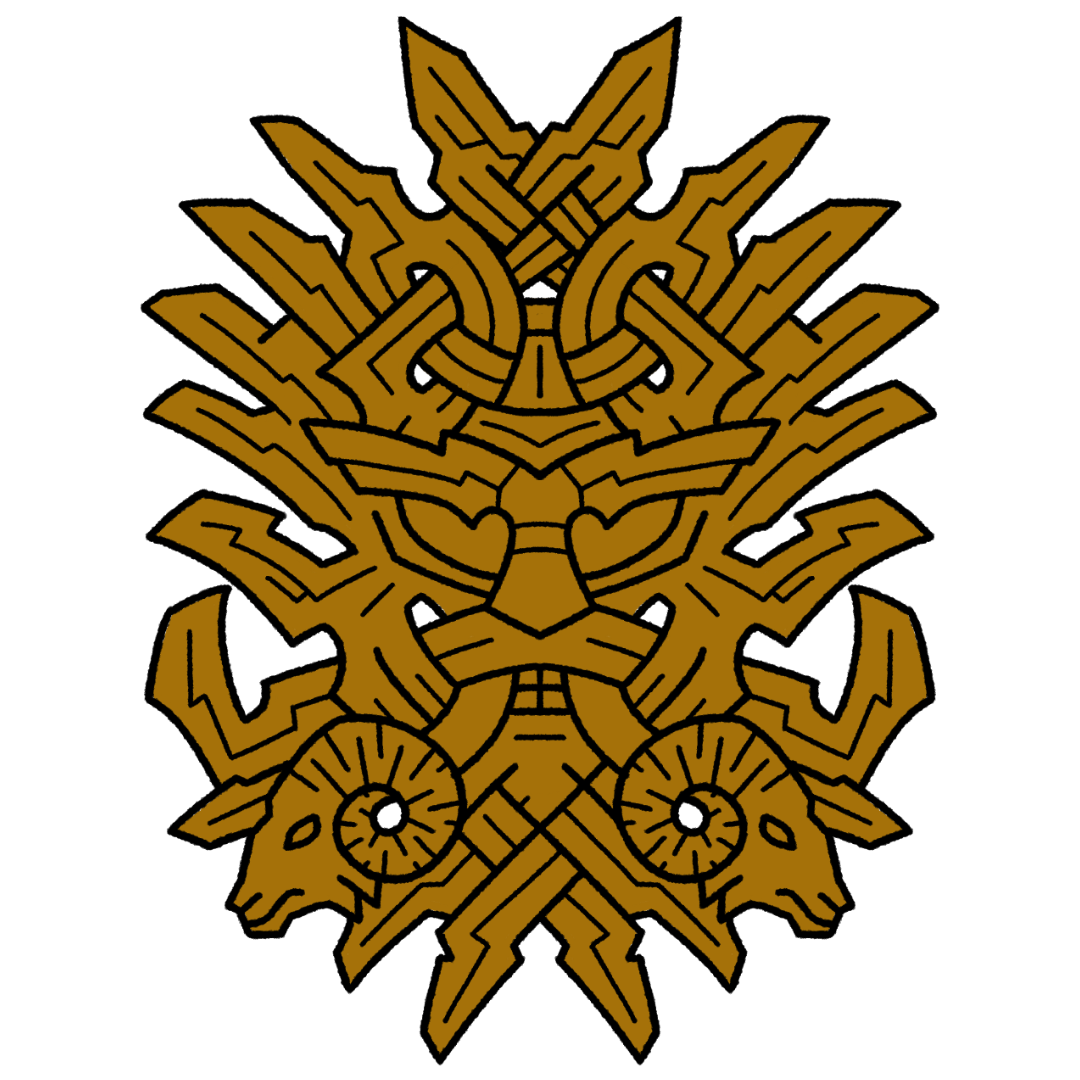
The Thunder God
Thor is the most frequently named deity in the saga material, and his importance is reflected in countless personal names and place names across Scandinavia. His name stems from an old Proto-Germanic word meaning “thunder” or “the thunderer”, which matches his role as the force behind thunderstorms.
Descriptions of Thor present him as the personification of thunder itself. He is depicted with fiery red hair and beard, quick to anger, loud-voiced, and physically imposing. His face reddens when stirred, and his eyes are described as sharp and piercing, like flashes of lightning. When Thor arrives, the earth shudders: thunder rolls, the air catches fire, and the mountains tremble.
Strength and Power
Strength defines him as clearly as thunder does. Thor is the strongest among gods and humans. He is tall and powerfully built, yet not monstrous like the Jötnar he battles. Sources also mention his enormous appetite, further reinforcing the image of sheer physical force.
Three possessions reflect his incredible strength. His hammer, Mjölnir (“grinder”), is described in Gylfaginning as the most precious treasure of the gods. It always returns when thrown. He also owns iron gloves for wielding the hammer and a belt that doubles his strength.
Family and Home
Thor’s family and home reflect his connection to thunder, strength, and the earth. He is the son of Odin and the Jötunn Jörð (“earth”). Thor is married to Sif (“relation by marriage”), with whom he has a daughter, Thrud (“strength”). He also has a son, Modi (“courage”), whose mother is not named in the surviving sources. His hall, Bilskirnir (“lightning-crack”), is described as the largest of all halls with 540 rooms, located in Thrúdheim (“the home of strength”). Thor also has a son, Magni (“strength”), with the Jötunn Járnsaxa (“iron dagger”).
Midgard’s Guardian
Thor protects Midgard in two closely connected ways. He shields the world from the Jötnar, and he brings the weather and renewal necessary for growth and harvest. Both aspects centre on his hammer, lightning, and strength.
Thor the Slayer of Jotnar
Thor is often described as travelling east toward Jotunheim, where he fights the Jötnar. He travels across the sky in a chariot drawn by two goats, Tanngnjóstr (“gnasher”) and Tanngrisnir (“snarler”). These battles maintain the balance between chaos and the ordered world. The threat of Jötnar reaching Midgard is a constant concern, and Thor’s presence offers safety. Saga literature calls him “the Friend of Men” and “the Defence of the Lineages”.
His many nicknames reflect this protective role: “Breaker of Mountain-Lords’ Necks”, “Terror of Ogresses”, “Bane of Thursar, “Jötnar’s Fear”, “Crusher of Rock-Lords”, and “Jötunn-Slayer”.
Folktales about Thor’s clashes with trolls are especially common in Småland. Some stories describe trolls hiding inside houses for protection. Gold foil figures shaped like a tiny troll, found as votive offerings, may suggest a custom in which households offered Thor a troll so he would not strike the house with lightning.
Thor as Renewing Force
Thor’s connection to thunder also tied him to fertility, fair weather, and successful harvests. Many later Medieval Christian folk customs preserve older themes once linked to him, especially in rural southern Scandinavia. In spring and summer, he appears as a renewing force associated with warmth, growth, and seasonal change. Through these cycles, Thor stands as a guarantor of continuity, guiding communities from scarcity toward abundance.
Late Winter: Peter Hot-stone (22 Goa Month / February)
This part of the year was linked to Thor’s melting of winter. Hot stones, fire, and thunder motifs appear in local tradition. The Christian framing centres on St Peter, but the deeper pattern fits an older sky deity. Þórsdrápa describes Thor hurling glowing iron at Geirröðr, an idea that echoes the image of hot stones falling from the sky, and ‘thunderstones’ —flint tools, fossils, and Neolithic axes—found in fields were interpreted as stones cast down by Thor.
Early Spring: Thor Month (March)
Early spring marks the return of warmth and the beginning of the thunder season, seen as a sign of Thor’s presence. In some regions, the month was known as Thordmåned, a name of debated origin but with clear cultural links to Thor. Folk tradition personifies Thor Month as a bearded man carrying heat.
The first three Thursdays of Thor Month held a special place in spring tradition. Known as Thorshelg, they were marked by candle‑lighting taboos and timed with the return of cranes to the landscape.
Summer: St Olaf’s Day (29 Hay Month / July)
St Olaf’s Day occurs just before the harvest, during a critical period when communities waited for crops to ripen. Thunder was believed to help grain mature. Olaf inherited the older aspects associated with Thor. His red beard, his axe as a stand-in for the hammer, and his role as a protector before harvest all echo motifs tied to the thunder god.
Sources
Hjarnø Rasmussen, Rune. 2020. The Nordic Animist Year.
Kaul, Flemming. 2018. Folkeminderne og Arkæologien 1. Skalk 2018, 4.
Kaul, Flemming. 2018. Folkeminderne og Arkæologien 2. Skalk 2018, 5.
Lyngdrup Madsen, Carsten. 2016. Nordboernes gamle religion – fortællinger fra edda, saga og kvad.