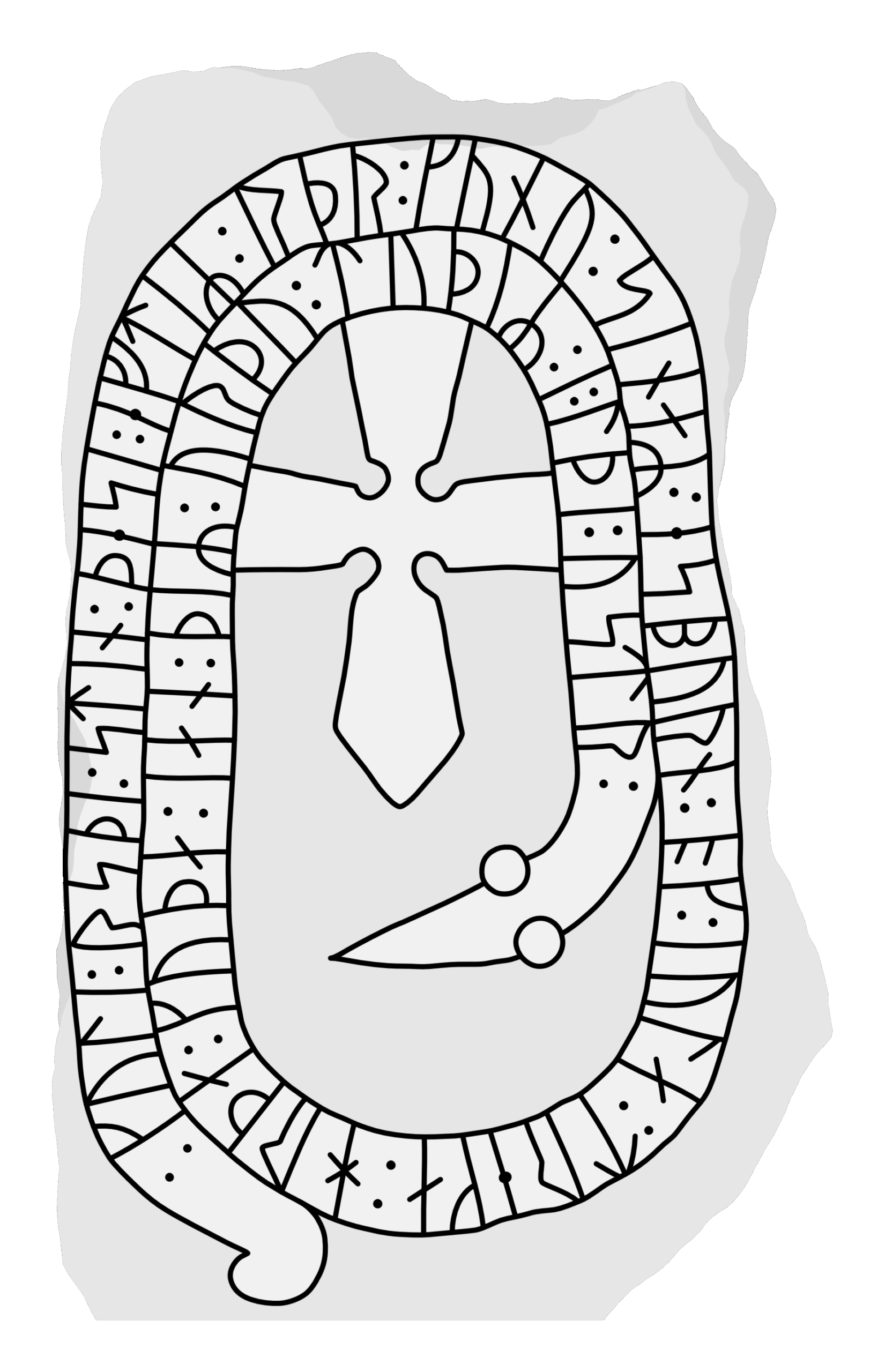
The carvings of the stone are in the runestone style B-e-v (c. 1010-1050) pertaining to the Ringerike style and contemporary with Pr 1 and Pr 2.
The inscription is not signed.
The granite stone is c. 1,48 m tall and 0,83 m wide.
Runic inscription
The rune text begins at the tail end of the serpent.
Runes
᛬ ᚴᚢᛚᛁ ᛬ ᚱᛋᚦᛁ ᛬ ᛋᛏᛁᚾ ᛬ ᚦᛂᛋᛁ ᛬ ᛂᚠᛏᛁᛦ ᛬ ᚱᚦᚱ ᛬ ᚴᚢᚾᚢ ᛬ ᛋᛁᚾᛅᛦ ᛬ ᛂᛋᛒᚢᚱᚾ ᛬ ᚭᚴ ᛬ ᛁᚢᛚᛅ ᛬ ᛏᚱᛂᚴᛅ ᛬ ᚼᚱᚦᛅ ᛬ ᚴᚢᚦᛅ ᛬ ᛁᛅᚾ ᛬ ᚦᛁᛦ ᛬ ᚢᚱᚦᚢ ᛬ ᛏᚢᚦᛁᛦ ᛬ ᛁ ᛬ ᛚᚦᛁ ᛬ ᚢᛋᛏᚱ ᛬
Transliteration
: kuli : rsþi : stin : þesi : eftiʀ : rþr : kunu : sinaʀ : esburn : ok : iula : treka : hrþa : kuþa : ian : þiʀ : urþu : tuþiʀ : i : lþi : ustr :
Old Norse
Gulli/Kolli ræisti stæin þennsi æftiR brøðr konu sinnaR, Æsbiorn ok Iula, drængia harða goða. En þæiR urðu dauðiR i liði austr.
English
Gulli/Kolli raised this stone in memory of his wife’s brothers Ásbjǫrn and Juli, very good valiant men. And they died in the east in the retinue.