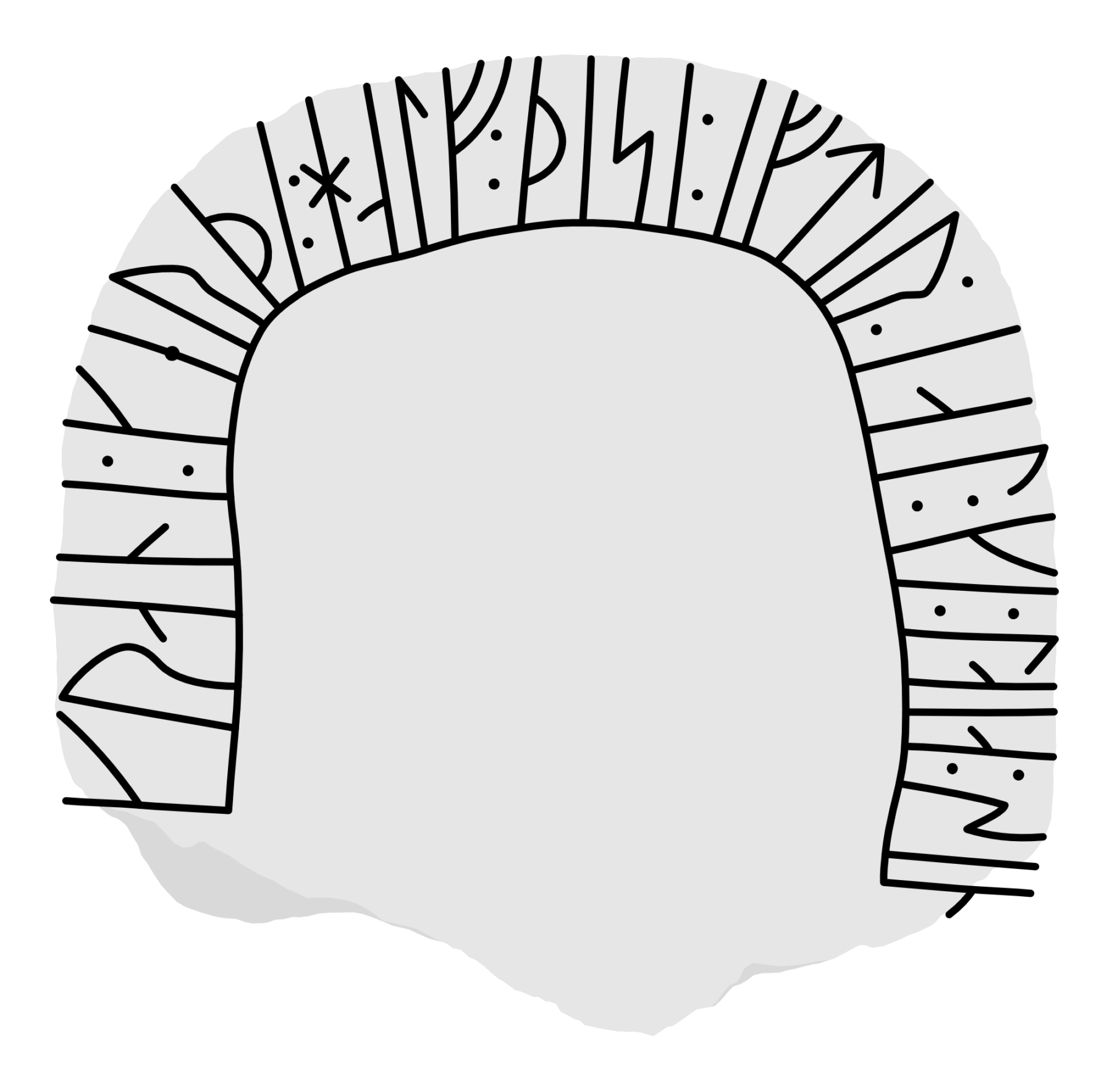
The carvings of the stone pertain to the group of unornamented runestones known as RAK (c. 980-1015), contemporary with the early Ringerike style.
The inscription is not signed.
The stone is c. 0,47 m tall, o,48 m wide and 0,12 m thick.
Runic inscription
The rune text begins at the bottom left corner.
Runes
ᚴᚱᛆᚿᛁ ᛬ ᚴᛂᚱᚦᛁ ᛬ (ᚼ)ᛆᛚᚠ ᛬ ᚦᛁᛋᛁ ᛬ ᛁᚠᛏᛁᚱ ᛬ ᚴᛆᛚ ᛬ ᚠᛁ᛬ᛚᛆᚴᛆ ᛬ ᛋᛁ(ᚿ)
Transliteration
krani : kerþi : (h)alf : þisi : iftir : kal : fi:laka : si(n)
Old Norse
Grani gærði hvalf þessi æftiʀ Karl, felaga sinn.
English
Grani made this vault in memory of Karl, his partner.
Notes
The Berezan island is located in the Black Sea by the mouth of the Dnipro River, and thus right on the eastern trade route from Scandinavia, through Kyiv, to Constantinople (Now Istanbul, Türkiye), the capital of the Eastern Roman Empire.
The shape of the stone is reminiscent of the slabs used in stone sarcophaguses on Gotland, and inscriptions of the word ‘hvalf’ (vault, coffin) also almost exclusively appear on Gotland. Thus, a qualified guess would be that Grani and his companion Karl were Gotlanders travelling to Constantinople when Karl died and was probably buried at Berezan.