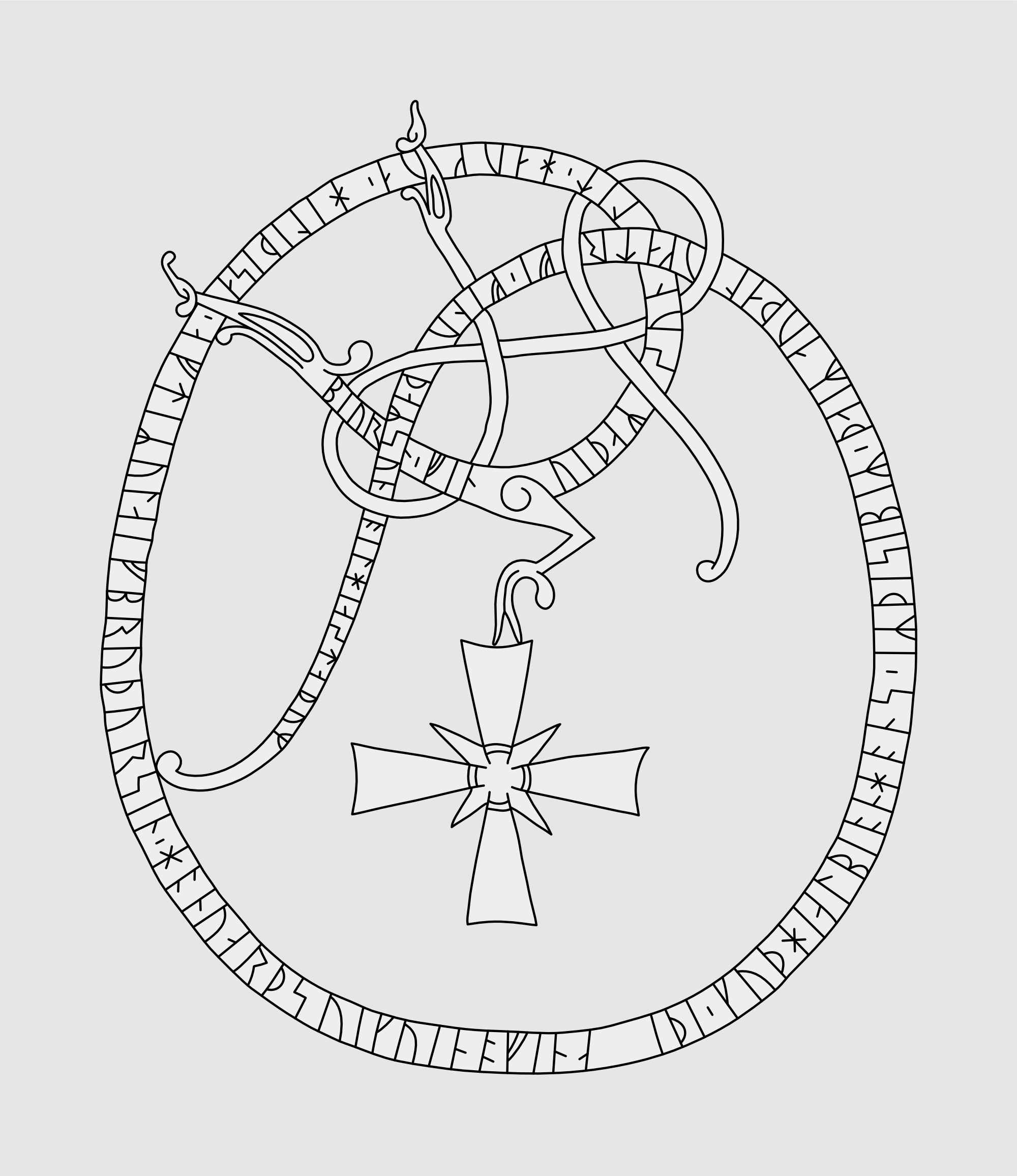
The carvings of the rock-face are in the runestone style Pr 4 (c. 1070-1100) pertaining to the Urnes style.
The inscription is c. 1,90 m tall and 1,54 m wide.
Runic inscription
The runic text begins at the neck of the animal.
Runes
ᛒᛁᚢᚱᚿ ‘ ᚠᛁᚿᚢᛁᚦᛆᛦ ᛋᚢᚿ ᛚᛁᛏ ‘ ᚼᛆᚢᚴᚢᛆ ‘ ᚼᛁᛚᛁ ᚦᛁᛋᛆ ‘ ᛆᚠᛏᛁᛦ ᚢᛚᛆᛁᚠ ᛒᚱᚢᚦᚢᚱ ᛋᛁᚿ ‘ ᚼᚭᚿ ᚢᛆᚱᚦ ᛋᚢᛁᚴᚢᛁᚿ ᚭ ᚠᛁᚿᛆᛁᚦᛁ ‘ ᚴᚢᚦ ᚼᛁᛆᛚᛒᛁ ᚭᚿ ᚼᚭᚿᛋ ‘ ᛁᛦ ᚦᛁᛋᛁ ᛒᛁᛦ ‘ ᚦᛆᛁᛦᛆ ᚢᚦᛆᛚ ᚢᚴ ᛆᛏᚱᚠᛁ ‘ ᚠᛁᚿᚢᚦᛆᛦ ᛋᚢᚿᚭ ᛁᛚᚼᛁᛆᛋᛏᛆᚦᚢᛘ
Transliteration
biurn ‘ finuiþaʀ sun lit ‘ haukua ‘ hili þisa ‘ aftiʀ ulaif bruþur sin ‘ hon uarþ suikuin o finaiþi ‘ kuþ hialbi on hons ‘ iʀ þisi biʀ ‘ þaiʀa uþal uk atrfi ‘ finuþaʀ suno| |o ilhiastaþum
Old Norse
Biorn, FinnviðaR sunn, let hoggva hælli þessa æftiR Olæif, broður sinn. Hann varð svikvinn a Finnæiði. Guð hialpi and hans. ER þessi byR þæiRa oðal ok ættærfi, FinnviðaR suna a Ælgiastaðum.
English
Bjǫrn, Finnviðr’s son, had this rock-slab cut in memory of Óleifr, his brother. He was betrayed* at Finnheiðr. May God help his spirit. This estate is the allodial land and family inheritance of Finnviðr’s sons at Elgjastaðir.
*The betrayal of Óleifr at Finnheiðr is interpreted to mean that he was killed in an underhanded way like an ambush instead of in an honourable way like direct combat.