Connection to the Jelling Dynasty
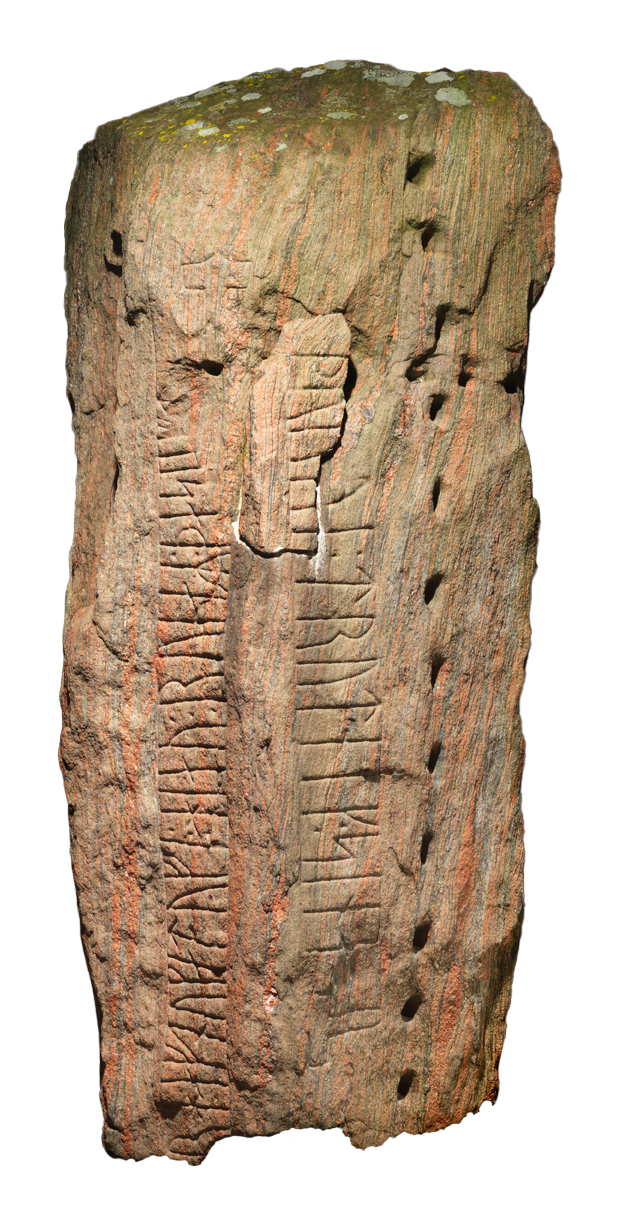
DR 26 was carved by the runemaster Ravnunge-Tue (“Tue, the Raven-Youth”), one of the most recognisable figures of Denmark’s runestone tradition. His name appears on several stones in the region. The inscription names Queen Thyra, linking DR 26 directly to the Jelling dynasty, which helps place it firmly within the 900s. Ravnunge-Tue calls himself Thyra’s steward, indicating that the carver worked in their service.
The Mjölnir Depictions
DR 26 is also notable for its carved Mjölnir-shaped designs. These motifs appear beside the runic band and are part of a broader trend in late Viking-Age Scandinavia where hammer symbols were used as protective emblems and as visible expressions of allegiance to traditional beliefs.
Runic Inscription
Transliteration
rhafnukatufi : hiau : runaR : þasi aft
þurui : trutnik : sina
Transcription
Hrafnunga-Tōfi hiō rūnaR þāsi æft Þōrvī, drōttning sīna.
Translation
Hrafnunga-Tōfi cut these runes in memory of Þyrvé, his lady.