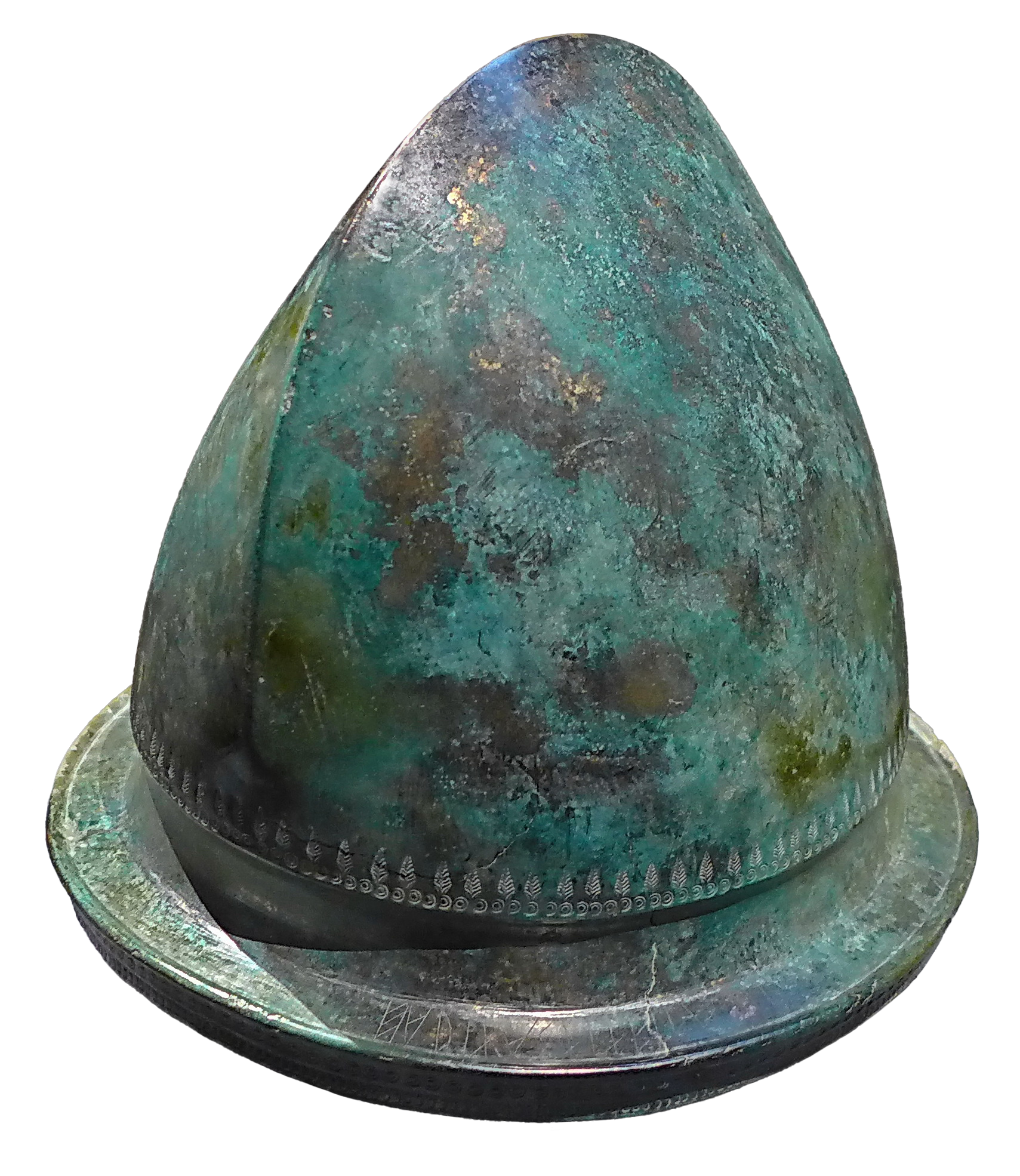
In 1812, a cache of 26 bronze helmets was found stacked at Ženjak in what is now Slovenia. All are of the Etruscan vetulonic type and were likely deposited for ritual purposes. Negau B is one of the group, distinguished by an inscription on its rim.
The inscription runs right-to-left in a North Etruscan alphabet. It reads hariχastiteiva, generally divided into two elements: Harigasti, a Germanic personal name meaning “army guest,” and teiva, related to Proto-Germanic *teiwaz, “god” or “divine.” The most widely accepted reading is “Harigast the priest.” The Germanic identity of Harigasti is broadly agreed upon; the reading of teiva and the language of the inscription as a whole remain debated.
The script is North Etruscan, not runic, and the inscription predates the first known runic inscriptions by several centuries. It is nonetheless one of the earliest known texts in a Germanic language, and sits at the centre of the ongoing debate over the origins of runic writing, as evidence of Germanic peoples engaging with Italic alphabets before the runic system took its own form.