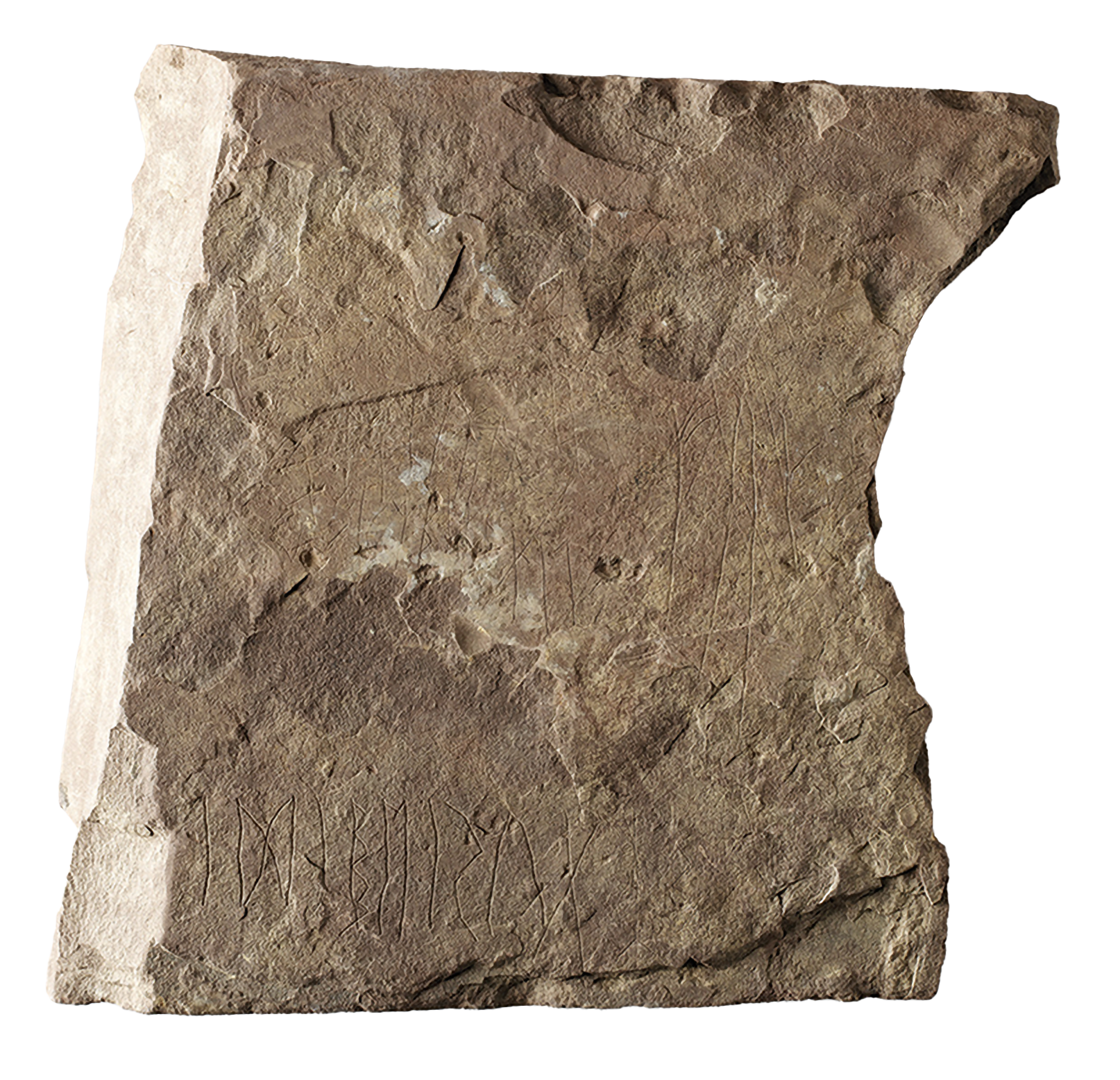
The Hole Runestone was not found whole. Fragments were recovered across three excavation seasons between 2021 and 2023 at the Svingerud grave field in Hole, Ringerike, and it was only through reconstruction that the pieces, retrieved from separate graves, were shown to belong to a single standing stone. The leading interpretation is that the stone was deliberately broken apart to mark different burials.
The reassembled stone carries three categories of inscription. On the main slab (Hole 2): a probable female name, ᛁᛞᛁᛒᛖᚱᚢᚷ idiberug (the final rune uncertain, possibly ᚾ), and the opening three runes of the Elder Futhark, ᚠᚢᚦ. On the fragments constituting Hole 3: a partial sequence reading ᛖᚲ(ᛋ)ᚷᚢᛚᚢ:ᚠᚨᚺᛁᛞᛟ:ᚱᚢᚾᛟ, read by some as a writer’s formula, “I, [name], carved the runes,” a form known from other early inscriptions. Non-runic markings are also present across the stone, their purpose unresolved.
Radiocarbon dating of the grave contexts places the stone between 50 BCE and 275 CE, making it the oldest known datable context for a runestone. Other early runestones exist, but few have been recovered from contexts that allow this kind of precision, and the find has prompted reassessment of dating across several other early inscriptions.